
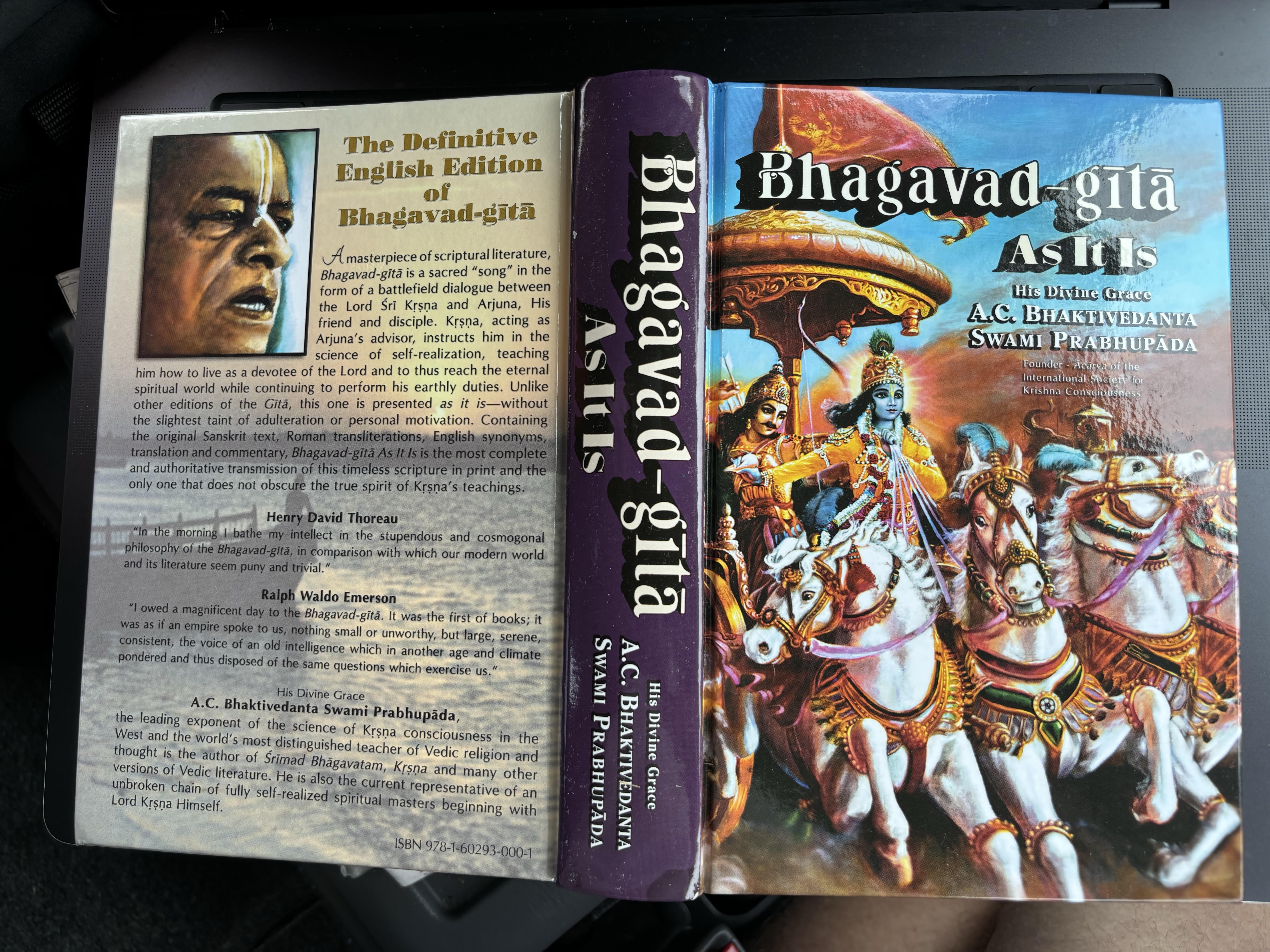
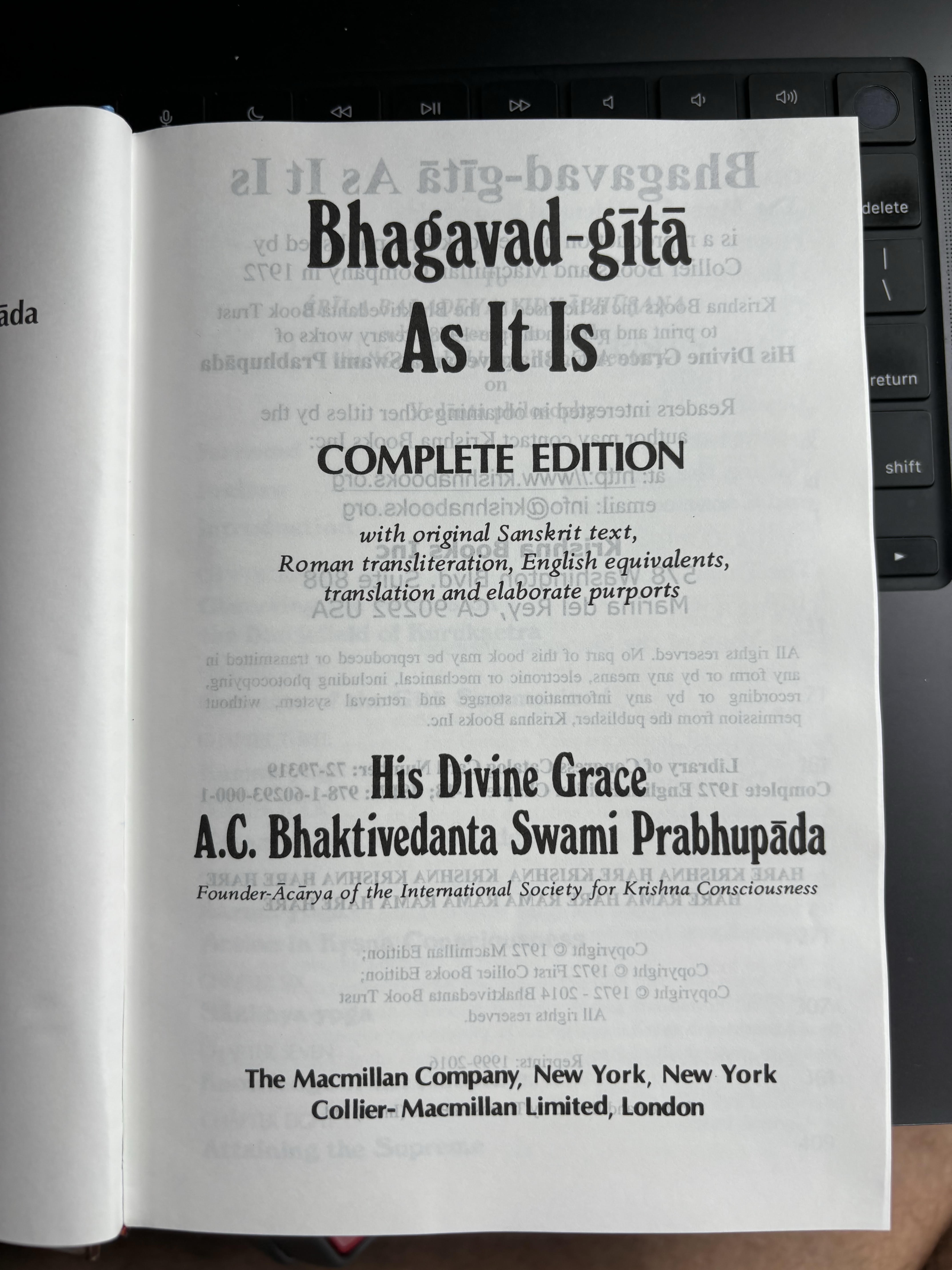
Even though Srila Prabhupada used this Bhagavad Gita Himself and seemed to give it His stamp of approval, still strictly speaking this work cannot be called Srila Prabhupada’s Bhagavad Gita As It Is when we compare it to the Original Transcript (OT) found here: https://bookchanges.com/bhagavad-gita-as-it-is-manuscript/
Anyone with little education, will quickly come to the very same conclusion. Too many bogus alterations and additions, and too many whimsical cuts have been effected. Srila Prabhupada was very liberal with his Bhagavad Gita and never double checked the editors. He ordered some changes such as blatant matters from “cattle-raising” to “cow protection” in BGAII 18.44
The result is that we are being mislead and being cheated. We are not getting Srila Prabhupada. We are getting Hayagriva aka Professor Howard Wheeler of Ohio State University, USA.
One of his most idiosyncratic behaviour is to systematically replace the expression “The Supreme Personality of Godhead” with his own concoction as “The Blessed Lord” or similar contorted expressions, especially in all the verses. But both editors do it in purport of BGAII 8.1, not only once but twice. Srila Prabhupada’s intention is to establish Krishna’s identity as “The Supreme Personality of Godhead” in the world’s psyche. But Hayagriva is out to sabotage Srila Prabhupada’s purpose. Him and his presentation need to be rejected.
He also replaced Srila Prabhupada’s original “brahmin”, with “brahmana”. “Brahmin” is just fine and used routinely. And Srila Prabhupada Himself uses it always in (OT). There is consequently no license to replace it with any other word.
Professor Wheeler also takes the liberty to impose the following sentence unto Srila Prabhupada’ Bhagavad Gita As It Is 2.40: “Or, as the Christians say, “What profiteth a man if he gain the whole world yet suffers the loss of his eternal soul?” This sentence does NOT AT ALL originate from Srila Prabhupada. It is Hayagriva’s view only and is therefore unwanted and rejected.
These are just three obvious examples to illustrate my point and there are hundreds and perhaps even thousands of other such examples. It is a bit like the soft drop of water, repeated over and over again, that brakes the hard stone or death by a thousand cuts.


 --The Australian Society for Krishna Culture. AUSKCULTURE, operation start 1984 -- ABN 65 231 425 870.